
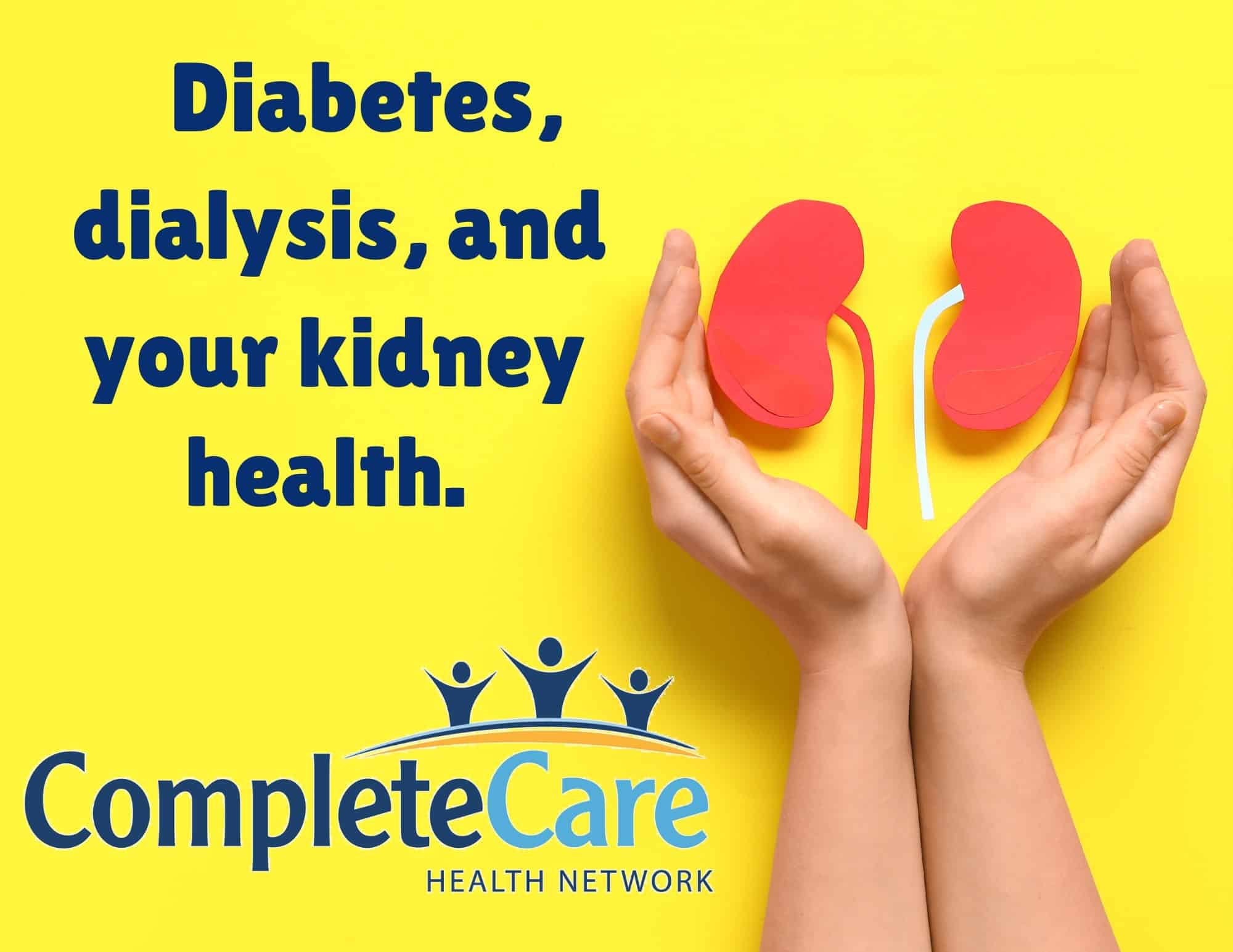
Did you know your kidneys clean your blood every single day? Think of them like a water filter for your body. They take out waste and extra fluid so you stay healthy. When your blood sugar stays too high for too long, it can slowly damage your kidneys. The good news? You have the power to protect them. Let CompleteCare Health Network show you how:
How Does Diabetes Damage Your Kidneys?
Your kidneys have tiny parts inside them that act like very small filters. When your blood sugar is too high for a long time, it damages these tiny filters. Over time, the kidneys stop working as well as they should.
Here is the tricky part: your kidneys can be hurt and you might not feel anything at first. There are no big warning signs early on. That is why it is so important to get checked even when you feel fine.
About 4 out of every 10 people with type 2 diabetes will have kidney problems at some point in their life. Studies show that keeping your blood sugar under control can cut that risk in half.
Your doctor will watch two simple numbers to check your kidneys:
- A blood test that shows how well your kidneys are cleaning your blood
- A urine test that checks if protein is leaking out — an early sign your kidneys need help
If you have diabetes, you should get these tests once a year. Ask your doctor about them at your next visit.
What Is Dialysis?
If the kidneys stop working well enough, a treatment called dialysis can take over their job. Dialysis cleans your blood when your kidneys can no longer do it on their own.
There are two main kinds of dialysis:
Type 1: Machine Dialysis (Hemodialysis)
A machine cleans your blood outside your body. Most people go to a treatment center 3 days a week for 3 to 5 hours each time. Some people can do this at home.
Type 2: Belly Dialysis (Peritoneal Dialysis)
A special fluid goes into your stomach through a small tube. It soaks up the waste in your body, then gets drained out. Many people do this at home, even while they sleep.
Dialysis is not a cure, but it helps people with kidney failure feel better and live longer. The most important thing is to never skip your treatments. Research shows that missing dialysis sessions leads to more trips to the hospital.
If you have diabetes and are on dialysis, your care team will also keep a close eye on your blood sugar. Dialysis can change how your body handles sugar, so your treatment plan may look a little different.
Good News: You Can Make a Big Difference
Here is what the research tells us:
- Keeping your blood sugar in a healthy range can cut your kidney disease risk by up to half.
- Some diabetes medicines also protect your kidneys. Ask your doctor if one of them might be right for you.
- Keeping your blood pressure low also helps protect your kidneys from damage.
- People who catch kidney disease early have much better results than those who find out too late.
Every healthy choice you make today is protecting your kidneys for tomorrow.
5 Simple Steps to Protect Your Kidneys
- 1. Get your kidneys tested. Ask your doctor for a blood test and a urine test to check your kidneys. Do this every year.
- 2. Know your blood sugar number (A1C). For most people with diabetes, the goal is below 7%. Your doctor can help you get there.
- 3. Watch your blood pressure. High blood pressure hurts kidneys too. Check it often and take your medicine as prescribed.
- 4. Ask about kidney-protecting medicines. Some diabetes medicines also protect your kidneys. Talk to your doctor to see if they are a good fit for you.
- 5. Keep your appointments. Whether it is a check-up or a dialysis session, showing up is one of the most important things you can do for your health.
CompleteCare Health Network Can Help
CompleteCare does not offer dialysis treatment, but our team can help you before your health reaches the need for dialysis treatment. We can also support you every step of the way if you do need dialysis care.
We can help you:
- Manage your diabetes and blood pressure
- Get the right tests to check your kidneys
- Understand your medicines and if new ones might help you
- Connect you with kidney doctors and dialysis centers if needed
- Find health insurance coverage through our Access to Care counselors
If you have diabetes and are worried about your kidneys, or if you have questions about dialysis, we are here to help. We can sit down with you, answer your questions, help you understand your health, and work with you to build a plan that fits your needs. We can also help connect you with the right places for dialysis care if needed.
At CompleteCare Health Network, we ensure no patient is turned away for care. We accept Medicaid, Medicare, and the uninsured. Our Access to Care counselors are availble to help find the right healthcare coverage for you.
Call (856) 451-4700 to schedule your appointment today!
References
American Diabetes Association. Standards of Medical Care in Diabetes—2024. Diabetes Care. 2024;47(Suppl 1).
Perkovic V, et al. Canagliflozin and Renal Outcomes in Type 2 Diabetes and Nephropathy (CREDENCE Trial). N Engl J Med. 2019;380(24):2295–2306.
UK Prospective Diabetes Study (UKPDS) Group. Intensive blood-glucose control with sulphonylureas or insulin. Lancet. 1998;352(9131):837–853.
Tuttle KR, et al. Diabetic Kidney Disease: A Report From an ADA Consensus Conference. Am J Kidney Dis. 2014;64(4):510–533.
United States Renal Data System. 2023 USRDS Annual Data Report. National Institutes of Health. 2023.
Heerspink HJL, et al. Dapagliflozin in Patients with Chronic Kidney Disease (DAPA-CKD Trial). N Engl J Med. 2020;383:1436–1446.